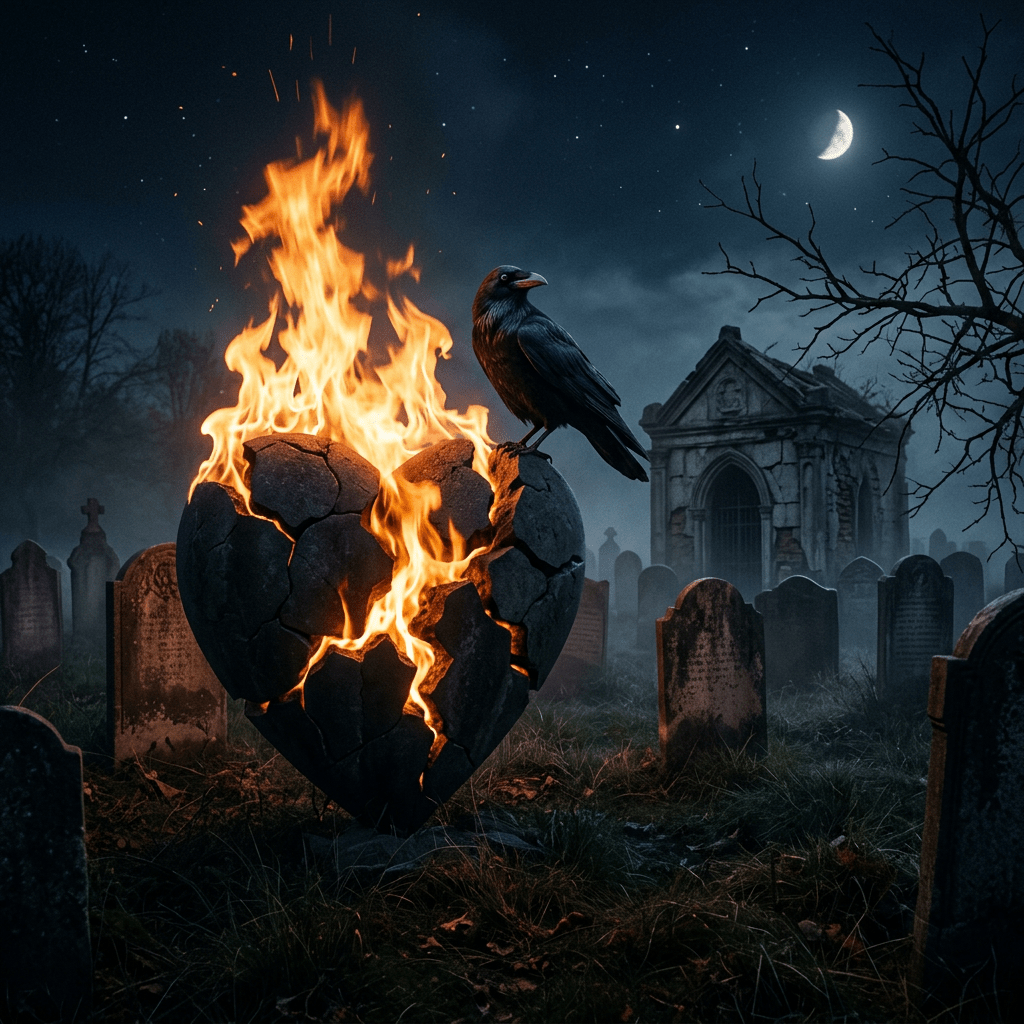
Take heart. I see your heart. With all my heart, too. We say ‘heart’ but what we mean is our soul. For I have seen a heart, open chest, electrical dependence of each thumping beat, a glorified muscular pump, a necessary vessel: empty of all wonder. The heart we infer, the tragic little heart we call our soul, we cannot see. We can feel it, sense it, and witness the cause and effects of a good soul and a bad soul. What is that? A good soul and a bad soul. Or is there only a soul and the truth and untruth of it’s masters actions?
The soul and identity intertwined and woven in the hands of God, timeless and yet eternal. Either light shines upon the soul or darkness sets. A choice. Not a consequence nor a predetermined state. That delicate heart we call our soul, still receiving and pumping, but it’s contents are neither blood nor gas. Filled with love and responsibility, or emptied by hurt and failed intentions. A soul is a receptacle that can only gives in excess of what it receives. Divine input fills unconditionally. Human input often poisons. Yet we give it away, to him, and her, and them, and everyone in between: what’s left at the end of our earthly run?
This tragic little heart, a new shiny car we must drive eighty years. Maintenance and washes, bumps and crashes. Our most vital organ. Our most delicate possession. No person can stare into that soul. No earthly medicine can mend it’s broken state. It pains us more than skin and flesh, and yet longs for something more. Your soul is who you are, a reflection of a piece of the divine creator. But we see it through the fog and smoke of burnt lies and untruths. This bleeding heart of mine, longs to be restored. To be filled by God and overflow. Just to bleed once more.
Romans 10:11: “As Scripture says, ‘Anyone who believes in him will never be put to shame.’”
What an awful, miserable, journey the death march of grief. To suffer the loss of love is to suffer the pain of death a hundred times a day: with every memory, hope, and dream. To suffer shame in grief, is to suffer the pain of death of the person whom you loved a hundred times a day: with every breath, every thought, every wandering moment. By the time the chaos of the mind slows, you are too far along for denial to protect you any longer. The anger and bargaining oscillate at a lower frequency; simple small electrical discharges in random moments throughout your day. Acceptance has visited you as if in a dream but remains an illusive apparition. Yet, now, there lies an opportunity to be still and to know.
In those moments, rather than pleading “why”, there is a chance to ask the real questions. Your conversations with God have been raw and exhaustive. You’ve shaken your fist, spit, screamed, cried, begged, praised, worshiped, fallen asleep, and woke up with sun every morning. And each morning his mercies were new. But even then, I had to ask: Can God see me through all of this shame?
So, I asked him, “God, can you see me through all of this shame?” “Can you even look upon me and recognize me?” I look in the mirror and I see the man that failed. I close my eyes and I witness my mistakes. I feel my emotions and they tell me I am a failure, beyond redemption. I am scared. Scared of what it is hard to say: loss, never having my person again, repeated failure, my reputation, my legacy…I’m scared that I am unredeemable. As I closed my eyes and shared my fears with God, I found myself in a beautiful green valley, surrounded by tall green hills, the fire burning off to the side, neatly maintained, and Jesus standing there with his arms held out. Our place, the safe space he created for me to see him and hear him where my thoughts quiet and my heart is open enough to receive.
God spoke. “I see you. I see only you. I made you from myself, a reflective piece of my body, innocent the day my spirit conceived of you. I named you before you were born. And it means ‘Bold’. I see a compassionate man, with passion to heal others. I see a love for my creation, a joy in the beauty of nature. I see only the man I created and the purpose I created him for. I cannot look upon your sin. I only see you in truth. Your untruths and your sins were forgiven and redemption was purchased, not earned, but given by my sacrifice. I feel your sadness, I feel your hurt, I feel your grief. But shame- I despised the shame I took upon myself at the cross, and it died with me, and I rose again so that you do not have to carry that burden. Your story is not over. I am the way, the truth, and the light. None of these can be obtained without the other. Follow me in truth and you will live in the light. Joy will fall upon your heart again. My kingdom you will serve. My peace I will give you beyond your own understanding. You serve the one true King and you are a jewel in my crown upon the throne I sit. Get up and start moving, I will be your strength in weakness. I see you.”
I cannot tell you how real my experience talking to God has been. That what he promised he has continued to fulfill faithfully. I wouldn’t have believed it myself, a once staunch diest who never doubted a creator or believed he was interested in intervening in my life. But as I stood up and moved, he consistently performed miracles in my life. I am still sad. I still hurt. I still grieve. And often I find my mind wandering, accumulating fear, whispering to me how disgusting of a failure I am. So, I return to that valley constantly, and he is always there, reminding me of my true identity.
I walked along the beach, some hour past midnight. The moon was low and red, the tide pulled high, the ocean vast. Where the water would end and the sky began was somewhere on the spectrum of imagination. Did I wander onto this place in company? No, I am certain I came here alone. My lonely footprints trailed behind the shifting sand. “Two footprints there beside my own, always within reach…”; the child’s prayer whispered at bedtimes everywhere came to mind. No, only one set of footprints chased my weary self. Though creations beauty mocked my brokenness, I did not feel his presence there. So, I went searching in the darkness.
Eventually, my feet came to meet the waters edge. It’s slow push and pull, rise and fall, the sand rushing from beneath my ten toes. I felt the salted plea to walk into the sea. The hidden urge to swim toward the non-existent horizon until I could go no more. Then, diving down on single breath, deeper, deeper, deeper still, until the weight of the water pulled me home. A sudden deep breath reminded me I was still standing there at the waters edge. The moon was stunning before me, the stars were bright above me, but upwards the beach was black and void. So, I went searching in the darkness.
My mind would wander here and there in violent sudden jerks of memories past and hopes future. My heart would swell in pain and mourn, each breath a seconds desperate relief. I talked a lot. To God and you. I suppose that is why I felt such company. My thoughts so deep I disappeared into the matching darkness ahead on the beach: a vapor. A dangerous place to be, to become my thoughts, my memories. Each step a falling leg of unconscious direction, I was just another empty shell upon that beach. Until the piercing pain of something sharp drew me from my stupor, I did finally stop. Uncertain of how I came this far, into darkness, along some quiet shore, I stood and stared.
I looked up into the void ahead and watched: a dark blot, a soft something, an orb of black. Growing closer, getting bigger, moving. Perhaps, some other person roamed this beach some hours past midnight, too. Closer still in eery quiet, bigger even with every moment. Then it stopped. I stepped closer, searching in the darkness. He stood there, a dark black stallion, tall in confident strength, his mares behind him shifting in the sand. A warning breath from flared nostrils as I stared. God was here. No footprints in the sand, but his fingerprints everywhere around me. I wanted to share it with you. This moment. This experience. But it belonged to me.
As suddenly as they came they raced towards me. My heart raced, too, but I was not afraid. I longed for death. Then, when almost in reach, they turned away and ran back up the shore. Once again transformed into their dark black orbs, growing smaller, darker still, until nothing. The darkness called me no longer. I looked up in that moment into the sky, hoping to see God or you. The stars were too many, bright and scattered, like spilled diamonds across a black felt cloth. They were beautiful and I was small. Insignificant to the stars, yet somehow still significant to the same Creator. I wondered if looking back the stars saw me shining in the same way I saw them. Are we stars to some cosmic eye? Shining bright, sharing light, burning hot, scattered about in service of the universe? So, I went searching in the darkness. Until light found me there.
My, how I have run to escape her, this thing called Fear, for nearly all of my life. I was introduced to her as a child: the blunt force, cold isolation, rancid stench of it’s presence in the room, as if it had only recently roomed with death before turning me to its prey. A devilish beast known to play with it’s food, leaving the hunted paralyzed and shaken but still alive. Fear. Fear of fear. The cycle that infects a lifetime of otherwise divine potential.
The more I hid from all of my fears the more creative she became. She’d strike and pierce my side or my heart, inflict my thoughts and my dreams; and though her presence was known, I could not see her though I tried. I saw instead anger, depression, rage, anxiety, abandonment, embarrassment, even laughter on the strangest of occasions. I saw desperation to protect myself, guard my heart, run, fight, hide. But it was her, I am sure. Fear, masked in my outburst, demanding I take control of everything or my fate would be the grave. Or worse, loneliness.
While she distracts you from awareness and leads you to your darkest emotions, how quickly she will work upon your heart and mind. Silencing God. Convincing you of great personal afflictions. Replacing your self image. Holding you back and tying you down. Fear is the great illusionist. An instinct for survival that secretly desires to be so much more. An irony that survival can be worse than death when consumed by her spirit. Fear needs to be fed and her appetite is endless. The pain of loss of flesh leads to coping and coping is our greatest temptations of false comfort when it is fear that has instructed us all these years.
Fear wears a thousand masks. Yet all of fear dies a thousand deaths when illuminated by truth. Love can never, ever, be received in a state of fear. That is why God did not create us in a spirit of fear, but one of strength, and power, and self-discipline. God hears us and he knows our fears. But we cannot hear him when we are consumed by it. Every prayer must start with an honest confession of our fears, a request to see ourselves as God sees us in that moment: fear will run and hide from the light shown in the truth. And the truth is that God makes each of us in his image. So that when we are weak, his strength is made perfect. He calls me Bold. And I rarely feel so, but when I need it most he says it out loud. You are bold. Because in your weakness you embraced me, you were brave, and you will have my strength.
“This is my command- be strong and courageous! Do not be afraid or discouraged. For the Lord your God is with you wherever you go.” Joshua 1:9
If I were death I wouldn’t roam. Never hidden false in masks of foes. If I were death and death were me, a friendly smile is all you’d see. The whispers cast on weary ears. I’d feast as friend on all your fears. Neither faith nor hope, your prayers, your truth, could distract me from my liars booth. For if death were me and I were death, you would not know if I came or left.
If any quiet hope in you remained, I would not fight you, I’d never strain. Every hurt that scarred your heart, is a path my lies would pick apart. If I were death and death were me, I’d aim my words so carefully. I’d stir your pain with lover’s touch. Convince so well you are you’re only crutch. For if death were me and I were death, you’d never feel me around your neck.
Since I’m not death and death’s not me, I’ll find my truth at Calvary. What I know death cannot see, before death came He set me free.
There was rumor once, of a place in me that grew, the most beautiful of lush green gardens. Rich was the soil, dark and moist, from which sprung life: foliage of all the colors bright and plain. Rumors told, too, that God wandered there; His own Son even prayed, knees upon that very soil, moist then from the sweat of his brow, from which sprouted more life so pure. Trees reaching, stretching their outermost fingertips to the skies in worship. Every ray of sun bleeding through to the pathways of unworn grass, untouched by weed or pest. There was rumor that garden, beautiful and green, was painted on my soul. What’s more, the rumors were true, whispered among the angels who watched me grow, that the garden was me, every tangled limb and reaching leaf the pieces of my being. My heartbeat vibrating softly through the vines and across the forrest floor. Living. Breathing. Known.
Did you hear the rumor then? That the trees did scream, too. Their pain was heard not by man or dog, but by ears eternal. The garden grew, but was not maintained. Weeds were gathered and planted about. Their thorns and vines striking through the soil, seeping up it’s moisture, strangling every flower that bloomed. Suffocating new life. The trees looked on in terror. Protectors of this forest floor, shade to the garden that was my soul. Rumor has it, it started with a spark. Not divine, but intended for evil. That spark grew, and drew upon itself every ounce of air til flames erupting, jumped about. That fire burned, hot and high, devouring every ounce of deadwood that fell, consuming vine and weed, branch and limb. Rumors spread, that the pain was savage, that even the trees did scream, too. Until after rain, and setting sun, and morning new: remained the life, once smothered by every weed and rotting log peaking through.
There is a rumor now, that God recognizes every plant that remains upon this garden floor. His watchful eye and strong right hand moving burned deadwood away. It is no rumor, that garden grows beautiful again today.
I have been crucified with Christ, and it is no longer I who live, but Christ lives in me; and the life which I now live in the flesh I live by faith in the Son of God who loved me and gave Himself up for me. – Galatians 2:20
The word innocent; it burns my own tongue and lips to utter and sits like a hot knife in the back of my mind. I am not innocent. I know, with all of my heart, that I am a good man. But innocent? No, I lost that long ago- or so, I thought. I have carried by guilt and shame like war trophies around my neck, felt the wrath of human judgement that burns like the fury of hell, and condemned myself to a place of suffering deserved by those who dare to violate the foundation of their moral values. This feels just. It feels deserved. Righteous punishment.
It is not surprising, then, that hearing God speak to me that I am innocent before him is painful, if anything, and impossible to comprehend. The idea that, perhaps, I never lost my innocence. Indeed, it could be so, as I was born into sin, that I never started at a place of innocence in the first place. I wasn’t born with it, I didn’t earn it, I’ve lost it many times: redemption. As I wrestle with my loss, a great loss due to my own confusing choices, I feel nothing but guilt and shame. Therefore, I wrestle too, with the idea of redeemable innocence. The idea that God redeemed me, that he only sees the real me and not the version of me that operated in falsehood, and upon that redemption is my innocence. I am not inherently innocent, but it is by his redemption that I am free of guilt. That does sound lovely. There is nothing more difficult to make sense of than this concept when you are suffering the loss of your own sin: actions, for which, you are guilty.
The only way that I might even begin to partially understand this concept of true unconditional love is to step outside the human constraints of time. We see each other from moment to moment. Always looking for confirmation that the person we are most vulnerable to is not who we thought they might be. Easily erasing the true heart and good of a man by summing him up by his mistakes and poor choices. After all, we must protect ourselves first, right? If they could do this now, they could do this 20 years from now. I thought they were good, but they proved me wrong.
The idea of unconditional love is a reflection of God’s love. He loves who we truly are. That is to say, that he loves the unique person and identity you were born with, delineating between the person who acted in sin and the person that truly exists. He is just to redirect us and remind us of who we are, but he does not recognize us as our sin. He cannot look upon sin, he only sees who we truly are. That is why we say, God never gives up on us. He cannot. This means, we are not only forgiven, we are not only free of guilt and shame, we are innocent. We seem incapable of doing just that for the people we love even the most. And we seem incapable of doing that for ourselves.
Grief is a game of loss in life. The steaks are literally life or death. So we have to search for the sparks of hope that are whispered between the screams of our tortured souls. One of those whispers that longs to be heard is: That is not how I see you. I see the real you. Redemption is yours and you are innocent not because you paid the price of suffering, but because I already did.
Knowing your true identity is our only fail proof navigation system in life. It is not about “finding yourself”. It’s about being honest with God and asking Him to know yourself, as He knows you.
The loss that brings your greatest grief strips you naked. It reveals your most vulnerable self to yourself and to the world. The bruises, the lacerations, the bites and scratches, the decaying flesh: frozen in time and space, unable to move and avoid the embarrassment and shame of your appearance and place. The universal experience of grief is not pain, it is the endless questions that plague your heart and mind. In this state, battered and deformed, it is hard to recognize yourself. You remember who you thought you were: who you were known to be. And you remember the mistakes you made, the horrible things you called yourself, and the horrible things people now call you. This, at a time when you are most vulnerable and must lean on whatever identity you can summon. How easy it is to believe that you are a wretched soul, deserving of this, and that this grief is your true identity.
The truth be told, if we were true to our identity we would rarely experience an unhealing grief. If we could forgive others, forgive ourselves, see God’s hand, and make our choices only within the true unique identity he gave us, we would have never have faltered and we would remain in his peace. We would not have lost our person to bad choices. Or we would celebrate the life of the person taken from us and heal in understanding of God’s eternity. But the struggle of dishonesty about our identity begins like a quiet and unseen virus, infecting our self perception before we start to display the symptoms. And when we are laying in the ashes of our most profound loss, what we need of who we are is hardest to see.
Honesty and confession. That moment where we find ourselves with only a shallow breath remaining and no will to go on- no more self defense, no energy to fight, no sense of direction- accepting the wave of self defeat and hoping for death…that moment is our opportunity to tell God what we call ourselves. Tell God the names and descriptions of what we believe has become our identity. I told God that I believed I was alone, unloveable, unredeemable, a failure, a bad husband, a bad father, a bad friend, a bad son, a bad brother, insecure, unworthy. I imagined myself sitting in the burning dirt and brush, bleeding and broken, unable to stand. The car I was in only moments before, full of a happy family, a loving wife, a satisfied husband, now wrapped around a tree, mangled in a heap, still smoking. I wrote those names on a list as Jesus walked up behind me. Reaching down with one hand he grabbed the list, dark and shaded in gray scale and no color. As his hand took the list a light spread down the paper and my outstretched arm. His other hand grabbed me by the side and lifted me up. As the light flooded in, like a rapidly rising sun over the horizon, the landscape was revealed. I was there, again, in the valley between flush green mountains, the fire burning beside us, flames dancing as if rejoicing my prodigal return. His arm never left me, but he reached down with the other hand and placed my list into the flames. It flashed, consumed by the fire, and a dove emerged: beautiful, white, disappearing high over the surrounding hilltops. Gentle, genuine lover, caretaker, resilient, father, son, friend, protector, fighter, servant, willing; He called out the names of my identity as he saw them, written on his heart. He pointed to look above me and there were the pieces of my world, his many angels working diligently, picking up the many fractured parts, building new ones, and putting it slowly back together.
Our identity is unique to us. But it was gifted and generates its actions the same: through love. And because he first loved us, that while we were yet his enemies he died for us to live eternal as his children. There is no condemnation in Christ. That is hard to understand when the blisters of self condemnation still drain from your grief and shame. But it is true. And if we accept our honest and true identity, we have all we need to remain in his steadfast direction.
Jesus had an identity that was unique to him and served as his compass throughout his life and ministry. It was proclaimed when he emerged from the water, held by John the Baptist: ” And a voice from heaven said, “This is my dearly loved Son, who brings me great joy.” Matthew 3:17. He chose not to accept the false identities hurled at him from those who loved and hated him, the world, and evil. And his path, his identity, brought us to freedom.
“Hearts can break. Yes, hearts can break. Sometimes I think it would be better if we died when they did, but we don’t.” — Stephen King
There are some things worse than death: loss of true love and separation from God. The pain exists in the space between the connection had and the seemingly endless future of connection lost. Like a ship lost in a storm with no sails and no rudder, we are at the mercy of the wind and waves, we drown below the surface of the deep waters, or succumb to the pounding rain above. One or both may never recover. One or both may. Only one is not reliant on the limited forgiveness, love, understanding of the will of man. That of the connection of God cannot be permanently deleted. God doesn’t walk away from us with his back turned because of hurt and anger. He cannot. He is part of us. And that connection is always a choice of our own, unlike a covenant between two fallible people.
I always thought that choice was a one time event. That forgiveness was available but not free. That it required some significant strength or quantity of faith and belief that had to be satisfactory to the cosmic police to get me into good standing. That confession meant saying “I am sorry”. None of that is found to be true when you are moments from being a corpse, with nothing that made you who you were remaining, your life in utter ruins. Sorry, did not connect me to God. Honesty did. And it wasn’t my strength, or quantity of faith, that led him to start picking up the millions of pieces. I know because I had no strength or faith remaining. I was on my final breathe when he stepped in to lift me up. Surrounded by angels. And even if we are still on life support, when he comes because we were honest to him and asked the right questions, we are at least no longer lying in the grave.
“We are not necessarily doubting that God will do the best for us; we are wondering how painful the best will turn out to be.” ― C.S. Lewis
The ashes of my terminal end seemed to fall about me for months. My panic persisted in abundance as I frantically thrashed about emotionally, desperate not to feel this remarkable pain of loss. Begging and bargaining out loud to nobody, waiting, screaming in an empty house, breaking into sudden fits of sobbing. I watched as she erased me from her life with out a word spoken to me. I thought of what helped in the past to cope with pain. Drugs? Never again, they only made my life worse the first time. Alcohol? I was too fearful I would take my own life if inhibited. Exercise? I couldn’t move. Frozen on the couch in a constant state of terror. Memories everywhere. Thoughts of her moving on to break her own promises too soon. I searched through a dating site and panicked in 36 hours, shutting it down- I couldn’t even imagine touching another person. I googled vacations and places to travel. Why travel with no person to make memories with, especially without the person you traveled with so much before the fall? Okay, all else failed perhaps a new hobby? Fear had become my new hobby. No light could shine onto any new possibility. To be honest, very little light still shines through the cracks of this prison wall. I found that all I could do is ask, why? Why God? WHY?
Driven by fear and pain, “why” is the first question on the lips of every suffering child. It necessitates a satisfactory answer. It mandates a response that is fulfilling. I only want to hear one thing- I’ll fix this. My entire being is so consumed by the flames of fear that any response to my cosmic questioning, except all that I lost will be reinstated, will not suffice. “Why did this happen”, falls from my mouth and lungs so many times that it eventually evolves unnoticed to “why aren’t you answering me”? My mind is so chaotic all I can hear is the constant drone of unwanted memories and the sound of my heart breaking into more pieces. My body and mind buzzing with a million thoughts, regrets, alone beneath a blanket of shame. I ask for forgiveness but cannot even come close to forgiving myself. Hanging myself on that cross without the respect of a burial and certain of no resurrection. I believe God exists. I believe he can put me back together, speak miracles into existence, calm my storm. But I only want one thing from him. So, what I perceive is silence.
When I found him in the garden, he was praying quietly, but he was speaking to me still: calling to me. Not giving me an answer. Not taking away my pain. Just inviting me to sit and share in his own experience of grief, even to the point of death. I had to wander in on him, there in that garden, several times. It took multiple invitations. Eventually, I sat there long enough to hear him speak again. “Now come with me to the cross”. Fear again took over because the cross demands my confessions. But this is what I asked him for: to hear him speak. Even then he did not answer my why. He wouldn’t because I already knew. I know why I am here. Instead I finally asked him what- what should I do? What do you want? What can I learn? What am I? What do YOU WANT ME TO UNDERSTAND? And then, the slightest movement. The next vision. The next image. Coming in more clearly every time. Speaking to me. First he demanded honesty. He demanded me to speak the truth in my confession. Then he walked toward the cross and I hoped to follow. That was my first real experience knowing for certain that I heard the voice of God. No voice at all- but I heard it still. What now? Well, I don’t know. But I do know, at least, He is real. And He speaks to me.
“Why” still wanders into my heart every few minutes, it seems. It still sucks the air out of the room and pierces my chest with sudden pain. I try to redirect my question to “what”. Knowing that “why” will trap me and “what” will eventually free me. Hoping. Wanting. Wishing. What do you want me to understand, Lord?